Forgotten Safavid-era village discovered in southern Iran
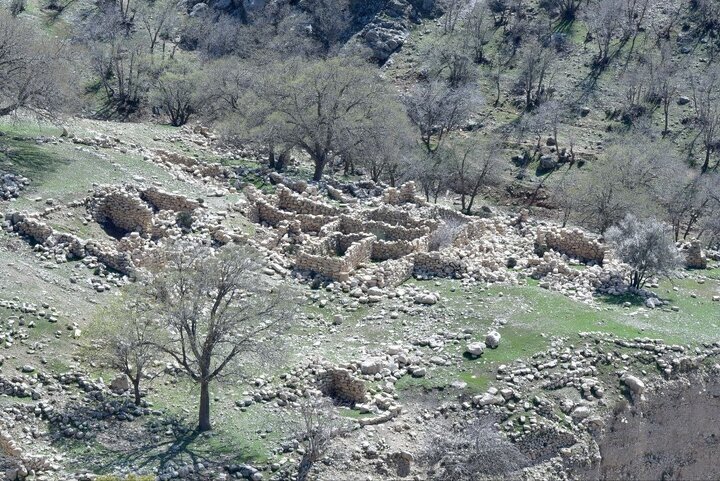
TEHRAN – Researchers have identified and documented the remains of an abandoned village believed to date back to the Safavid era in the Dasht-e Barm forest area of Kazerun county, Fars province, southwestern Iran.
The village, named Royin, had been deserted for years and was not mentioned in any of the accessible databases reviewed by researchers, according to Mohsen Abbaspour, a cultural heritage researcher and activist.
Speaking to ISNA, Abbaspour said the discovery emerged from a year-long research project examining historical settlements in the oak forests of Dasht-e Barm, which lie within the Arjan-Parishan Biosphere Reserve.
Researchers identified the village's name by studying inscriptions on gravestones in two historic cemeteries and collecting ethnographic information from neighboring villages. Some inscriptions included the name Royini as part of the names of people buried there.
The oldest legible gravestone documented so far records the death of a woman in Jumada al-Awwal 1110 AH, corresponding to the late Safavid period. Abbaspour said comparisons between the village's surviving houses and architectural patterns in other Safavid-era settlements in the Kuhmareh region of Fars also support the conclusion that Royin dates back at least to that period.
The research documented the remains of the residential area, two cemeteries situated on opposite sides of a seasonal river, and approximately 21 hectares of terraced gardens.
Based on comparisons with other historical villages in the region, researchers believe residents relied on livestock raising and cultivated fruit trees suited to the local climate, including figs, plums and walnuts.
Pottery fragments examined during the study further support the proposed dating and suggest that the settlement once sustained an active community. Residents used pottery with simple decorative finishes, along with stone tools, for everyday activities, Abbaspour said.
The research also examined the village's layout, place names, surviving architecture, energy sources and historic gravestones. The findings have been documented in a research paper.
Abbaspour expressed hope that efforts to register and introduce the village would encourage further academic research and attract visitors interested in Iran's historic rural settlements.
Dasht-e Barm lies about 30 kilometers north of Kazerun, along the road connecting the city to Shiraz. The forest area contains several other historical remains, including a caravanserai, sections of an ancient southern route, historic cemeteries, old mills and abandoned or historic villages.
AM
Leave a Comment